Many people assume that if they wake up with back or neck pain, they simply “slept wrong.” While that phrase gets used a lot, there is actually some truth behind it. The position you sleep in each night can place stress on your spine, muscles, and joints. Over time, poor sleep posture may contribute to stiffness, headaches, neck pain, or lower back discomfort that follows you throughout the day. At Southern Spine Family Chiropractic, we help patients throughout Madison, MS identify everyday habits that may affect spinal health, including the way they sleep.
Can Your Sleeping Position Really Cause Back Pain?
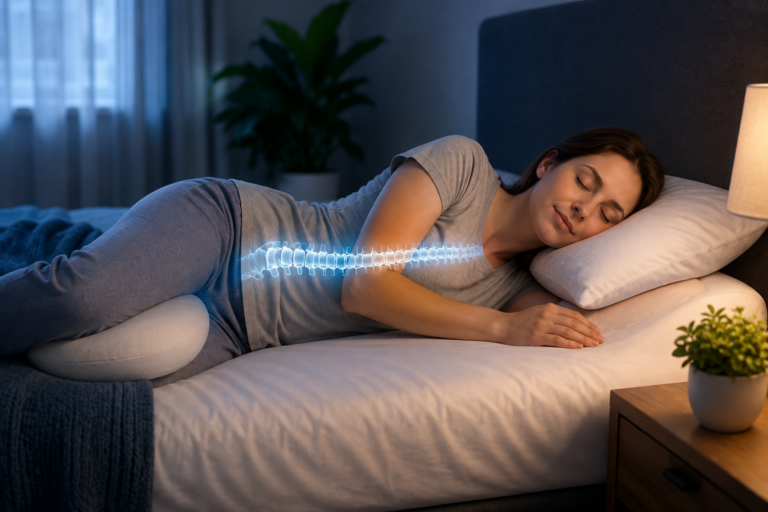
Yes, it can. Your spine works best when it maintains its natural curves. Sleeping in positions that twist your neck, arch your lower back, or place uneven pressure on your joints can increase muscle tension and strain. While an occasional uncomfortable night usually isn’t a concern, consistently poor sleep posture may contribute to ongoing discomfort.
Common symptoms include:
– Lower back stiffness in the morning
-Neck pain after waking up
-Shoulder discomfort
-Morning headaches
-Difficulty standing up straight after getting out of bed
What Is the Best Sleeping Position for Your Spine?
There isn’t one perfect position for everyone, but certain positions generally support better spinal alignment.
Sleeping on Your Back
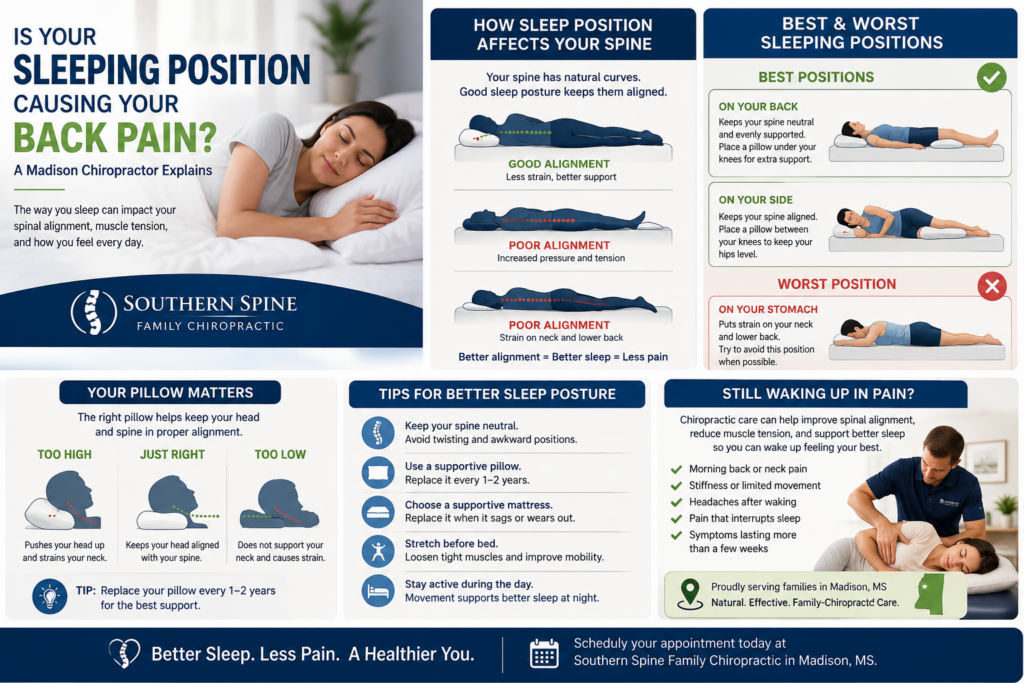
Back sleeping is often considered one of the best positions for spinal alignment because it distributes body weight evenly. Placing a small pillow beneath your knees may help reduce stress on the lower back.
Sleeping on Your Side
Side sleeping is another excellent option for many people. Keeping a pillow between your knees can help keep your hips level and reduce pressure on your lower back.
If your shoulders become sore, make sure your pillow properly supports your head without tilting your neck too high or too low.
Sleeping on Your Stomach
Sleeping on your stomach is generally the least supportive position. Because your head stays turned to one side for several hours, it can place extra stress on your neck. It may also increase pressure on the lower back.
If stomach sleeping is your preferred position, placing a thin pillow under your hips may help reduce strain.
Your Pillow Matters More Than You Think
Many people focus on buying a new mattress while overlooking their pillow. A pillow should keep your head aligned with your spine. If your pillow is too high, your neck bends upward throughout the night. If it’s too flat, your neck may not receive enough support.
Replacing worn pillows every couple of years can help maintain proper support.
Could Your Mattress Be Contributing to Pain?
An old or unsupportive mattress may also affect spinal alignment.
Signs it may be time for a replacement include:
-Visible sagging
-Waking up sore every morning
-Better sleep on another mattress
-Springs or uneven support
While no mattress can prevent every type of back pain, proper support can improve sleep quality and comfort.
How Chiropractic Care May Help
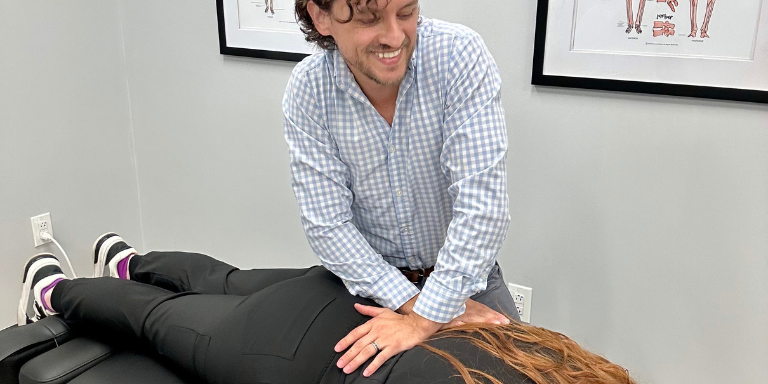
If you’ve improved your sleep habits but still wake up with pain, your spine may benefit from a professional evaluation. Chiropractic care focuses on restoring proper joint movement, improving spinal alignment, and reducing muscle tension that may contribute to discomfort.
Depending on your individual needs, your chiropractor may recommend:
-Gentle spinal adjustments
-Posture evaluations
-Stretching exercises
-Lifestyle recommendations
-Sleep posture education
Every treatment plan at Southern Spine Family Chiropractic is personalized to help patients move more comfortably and improve their quality of life.
Simple Tips for Better Sleep Posture
Improving your sleep posture doesn’t have to be complicated.
Try these habits:
-Keep your spine as neutral as possible.
-Replace worn pillows when they lose support.
-Sleep on a supportive mattress.
-Avoid sleeping with your arm tucked beneath your head.
-Stretch gently before bedtime.
-Stay physically active during the day.
Small changes often make a noticeable difference over time.
When Should You See a Chiropractor?
Occasional stiffness after sleeping is common. However, recurring pain shouldn’t become part of your normal routine.

Consider scheduling an appointment if you experience:
-Morning back pain several times each week
-Neck stiffness that limits movement
-Frequent headaches after waking
-Pain that interrupts your sleep
-Symptoms lasting more than a few weeks
A chiropractic evaluation can help identify whether spinal dysfunction or poor movement patterns may be contributing to your discomfort.
Frequently Asked Questions
What is the best sleeping position for back pain?
Sleeping on your back with a pillow under your knees or on your side with a pillow between your knees generally provides the best spinal support for many people.
Can poor sleep posture cause neck pain?
Yes. Sleeping with your neck in an awkward position for several hours may contribute to muscle tension and stiffness.
Can chiropractic care help if I wake up with back pain?
Chiropractic care may help improve spinal mobility, reduce muscle tension, and address joint dysfunction that could contribute to recurring morning pain.
How often should I replace my pillow?
Most pillows should be replaced every one to two years, depending on the material and how well they continue to support your head and neck.
Is a firm mattress always better for back pain?
Not necessarily. The best mattress is one that keeps your spine properly supported while remaining comfortable for your body type.
Helping Madison Families Wake Up Feeling Their Best
Quality sleep is essential for your overall health, but your sleeping position can have a significant impact on how you feel each morning. Supporting your spine while you sleep may help reduce strain, improve comfort, and make it easier to stay active throughout the day.
At Southern Spine Family Chiropractic, we proudly help individuals and families throughout Madison, MS improve spinal health through personalized chiropractic care. Whether you’re waking up with neck pain, lower back stiffness, or recurring headaches, our team is here to help you find natural solutions that support long-term wellness.